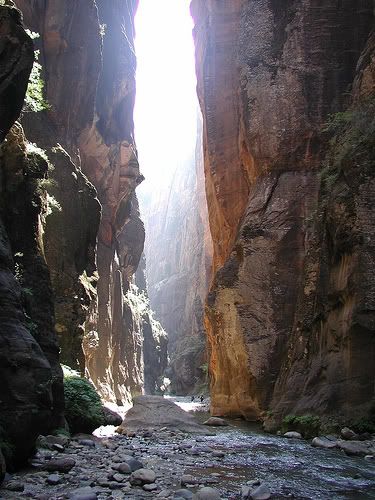
Grace Walk
Walk with Me and work with Me--watch how I do it.
Learn the unforced rhythms of grace.
I won't try to lay anything heavy or ill-fitting on you.
Keep company with Me and you'll learn to live freely and lightly.

-Matthew 11:29-30 The Message


Hidden Treasures
One of the most satisfying aspects of writing
is that it can open in us deep wells of hidden treasures
that are beautiful for us as well as for others to see.

-Henri Nouwen in Bread for the Journey

A Modern Day Psaltery
David wrote psalms to express
what was in his heart.
Seeing no need to hide what he felt,
he wrote with sincerity, and with no hidden agenda.
What he felt was never taken against him.
Pray, dear reader, discern my heart between the lines.
Dinah Maria Craik couldn't have said it better:
"Oh the comfort -- the inexpressible comfort
of feeling safe with a person --
having neither to weigh thoughts nor measure words,
but pouring them all right out, just as they are,
chaff and grain together;
certain that a faithful hand will take and sift them,
keep what is worth keeping,
and then, with the breath of kindness
blow the rest away."
Showing posts with label Theology of Weakness. Show all posts

Sunday, April 12, 2009

A Spirituality of Waiting - Part 2


Continued from A Spirituality of Waiting - Part 1


My mother in law died five years ago. She lived next door to us. Around her house is a small garden. Because of her age, she was not able to tend her garden as much as she would have wanted.

I grew up in a garden. As a little girl, I always knew where to find my father - in his garden. Papa had a cabinet where he kept his garden tools, his garden shoes, his garden pants. My father was a gardener at heart, and just like him, I am a gardener at heart.

I would look at my mom in law's garden wishing I had the freedom to take care of it. A few times after I had done some well-meaning changes, she had reprimanded me. So to respect and honor her, I left her garden alone.

But the day after we buried her, in honor of her memory, I decided to make her garden a beautiful place. My second son, Worshiper, who is also a gardener at heart, and I set about pruning the vines and the bushes. We cut down a few small trees that were overgrown and crowding each other out. We re-planted, re-potted, tilled the soil, cut the grass. The rose bushes were thick and all over the place, so we pruned those too, even the ones with fair petals in full bloom and other branches just beginning to produce buds.

For a few weeks, it looked like the place was windswept. Nothing left but a few palm trees, a number of pruned vines and bushes, and many wilted cuttings sticking out of the ground.

But in my heart I knew what I was doing; I had already visualized how the garden would eventually look like.

Everyday I was drawn to that garden, devoting care and a loving touch to it. Months later, the garden was recovering, many new leaves and buds were out. The garden was showing great signs of promise.

It was all a matter of patiently waiting for the picture in my heart to materialize.


God put Adam and Eve in the garden of Eden. Eden has a variety of meanings, one being "delight" or "abundance." I once heard our pastor say that Eden literally means "in the moment," or, "eternal."

There is no time in eternity. Eternity will have a timeless quality about it.

Now that the victory has been won, today you and I are re-planted in Eden, that timeless garden of possibilities.

God gives us opportunities to encounter eternity in our daily lives. It's just that sometimes, the moment is upon us, and we don't recognize it. Therefore we don't seize it, we fail to drink it in, and we lose the opportunity for it to speak new things into our hearts.

But once we have had a foretaste of eternity, we won't be able to get if off our minds, even if our understanding of it may simply be a shadow compared to God's all-encompassing light from which He views all of life.

Being in an eternal moment, where all components of God's creation are at peace and in harmony with each other, I see how my human trichotomy of body, soul, and spirit, can be at peace and in harmony, relating to each other in perfect balance.

Shalom, that Hebrew word for "completeness, soundness, perfection and fullness," is what Eden was all about. I believe that shalom is the essence of all creation - everything complementing one another, everything working perfectly together. Just like an art masterpiece where all the components blend together in perfect harmony and balance.

The God of Peace can only impart peace.

In the eternal moment, shalom is the air I breathe.

This world's time was not God's invention, it came as a result of the fall. Therefore, living and operating under it dehumanizes us, makes us less than human. Because the human beings which God created in Eden, "in the moment," were creatures of shalom.

When Adam fell, time began to be measured, ticking off in seconds, minutes, and hours. It became a taskmaster, and we its slaves.

How awesome to realize, as a sliver of light begins to shine into my understanding, that in God's eyes, this world's time is still under His authority. Henry Cloud calls it redemptive time, or the time God uses to give us divine opportunities to respond to him and be healed, restored, and be put back "in the moment."

No wonder, Hans Burki, the Swiss retreat director I spoke of in my earlier posts, gave his life to teaching many on the value of cultivating inner silence. From this quiet center, we are meant to draw strength and sustenance for this life's journey.

As redeemed human beings, we can go through life operating under the eternal moment. Shalom can be our guiding force. Time doesn't have to tick for us, it doesn't have to be our master. We can flow with it, and be carried off gently on its waves, very much in the way Eugene Peterson says we are to "learn the unforced rhythms of grace."

Time can be our friend and ally to help us fulfill the purposes of God for our lives.

We need not be in a constant state of
Zerissenheit, a German word which I understand literally means, "torn-to-pieces hood". Living under the power of the world's time will inevitably shatter us to fragments. I must say that dehumanization is the process of being fragmented, and sadly, isn't humankind very much so today?

My spirit recoils at the thought of ceaseless strivings, and a running after every
this and that. Jesus Himself said that if we have food and clothing, with that we can be content.

Contentment. Simplicity. These are the outward manifestations of shalom, of living in the eternal moment. Hans Burki taught us the value of learning to say, "It is good enough."

The psalmist has captured and depicted these lines in a beautiful picture of shalom and the eternal moment:

But I have stilled and quieted my soul;
Like a weaned child with its mother,
Like a weaned child is my soul within me.
- Psalm 131

Sue Monk Kidd once wrote that time is not a continuum on which we merely exist, but a deep dot in which we dwell.

Time can be like a bomb ticking off in seconds. But it can also be a peaceful dwelling place to explore and experience more fully as time goes by, discovering just how rich and how meaningful each moment of our life can be.

Living in the eternal moment helps bring healing and wholeness to us as persons, and leads us onward to the embrace of the Father where He lives in an eternal
now.

Teach us to number our days aright that we may gain a heart of wisdom. (Psalm 90:12)

Help us to live within Your redemptive time, Lord!

If we are willing, God can help us to re-create life right in this garden of possibilities where we are.

Waiting opens up to us a new perspective from which to view this life. A theology of weakness does not always have to be lived within the context of a future weight of glory, where we are "grinning and bearing it" until we reach heaven! Waiting does not have to be, in the words of Henri Nouwen,
an awful desert where we are and where we want to go.

Living out a theology of weakness means a constant encounter with Truth -- the truth of who are are in Christ, and what our destiny is all about.

Everything we do and say and experience can have a creative quality about it for we are "creators" made in the image of God. We are agents of redemption, agents of Christ's mercy and compassion.
Death and life are in the power of the tongue (Proverbs 18:22).

I have had to repent time and time again for going through life with a demanding spirit, expecting people and events to live up to my expectations. I've had to repent for making myself the standard by which I measured, or "judged" others!

God has to continually remind me what it means to be as
broken bread and poured out wine for the persons around me. And there have been glorious foretastes of heaven when I have chosen to let go of self, to yield my Isaac upon the altar of sacrifice, and receive a measure of freedom I've not experienced before.

God is inviting each of us to live with woundedness without harboring an offended, judgmental spirit, to be patient with our unhealed wounds as well as those of others around us.

It is not only the mountaintop and peak experiences that give beauty and meaning to our daily lives. Christlike character is formed in the valleys of our lives, in our weak moments when we experience deep wounding and yet choose to respond in love and mercy.

And God has so designed it that it is in the valley of our lives where we also become the most fruitful. It is in our wilderness seasons that God sings His sweetest love songs to us. It is in the area of our afflictions, after we have overcome and passed the test, that our anointing flows and spiritual authority begins. It is when our deepest wounds get healed that God's glory shines the brightest!

God doesn't always want to remove us from our pain, just as Paul endured his thorn in the flesh that he may be constantly reminded to be humble.

God is not after our healing, per se. He is after our heart. He wants to see in our hearts a reflection of His glory, truly a lovely bride in the making, spotless and without blemish for the day of His Son's return.

I want to end this Resurrection Sunday post with this quote from Ugo Bassi, one of my favorites, and the one that I want engraved on my tombstone:

Measure thy life by loss and not by gain
Not by the wine drunk but by the wine poured forth
For love's strength standeth in love's sacrifice
And he that suffereth most, hath most to give.


And for those who find themselves struggling to live out a theology of weakness, and feel like your successes are meaningless... maybe you have lived with unhealed wounds... with disappointments, broken dreams.... Or maybe you are just plain weary and worn out from facing life's battles day after day...

God is calling out to all of us with this invitation from Isaiah 40:28-31

Do you not know, have you not heard?
The LORD is the everlasting God
The creator of the ends of the earth.
He will not grow tired or weary
And His understanding no one can fathom,
Even youths grow tired and weary
And young men stumble and fall
But those who hope in the LORD
Will renew their strength
They will soar on wings like eagles
They will run and not grow weary
They will walk and not be faint.


Saturday, April 11, 2009

A Spirituality of Waiting - Part 1

Almost Heaven
by Thomas Kinkade


For I consider that the sufferings of this present time
are not worthy to be compared with the glory
which shall be revealed in us.

For the earnest expectation of the creation
eagerly waits for the revealing of the sons of God.

For the creation was subjected to futility,
not willingly, but because of Him who subjected it in hope;

because the creation itself also will be delivered
from the bondage of corruption
into the glorious liberty of the children of God.

For we know that the whole creation groans and labors
with birth pangs together until now.

Not only that, but we also who have the firstfruits of the Spirit,
even we ourselves groan within ourselves
eagerly waiting for the adoption,
the redemption of our body.

For we were saved in this hope,
but hope that is seen is not hope;
for why does one still hope for what he sees?

But if we hope for what we do not see,
we eagerly wait for it with perseverance.

Romans 8:18-25


These past days I shared my thoughts about a theology of weakness. Today, I will write about something that is very close to my heart - heaven.

What is it that you really long for, deep inside your heart? What is it that you really long to do? What is it that you really long to be?

Each one of us has a dream deep inside our true selves; every now and then we hear that dream calling out to us. If we are quiet enough, on some days, it comes to us--and time stops as we find ourselves alone with the still small voice of God.

The awesome thing is that He's not really saying anything... He's just there. You wake up in the middle of the night, you sit up in bed, and you sense His holy quiet, His unobtrusive gentle presence saying, "I'm here."

I call it an eternal moment.

Sometimes it is in the middle of a busy day at work, or of a household chore, when you suddenly feel like time is not moving, and you have an encounter with an eternal moment.

It's not always like God Himself is showing up. Sometimes it is a piece of your dream, sometimes it's a bubble of joy, a ray of hope. Suddenly you feel like shouting a line of a song you have never even heard before. Or you suddenly feel like dancing! It takes you by surprise.

I believe it is still the presence of the Eternal. Except that God's so great, so awesome, so quiet, so beautiful... He's so deep, and unfathomable, and beyond description.

It is God's presence, revealing Himself to us in a new way. He just loves to do that with us. He loves to set us free from the containers of our stale and worn out experiences.

When such moments take place, there are no words adequate enough to describe what's taking place. But it feels like you're almost... in heaven!

Have you ever been to heaven?

If God is our heavenly Father, and Jesus is our King, Redeemer, and Lord, then the answer is, "Yes, of course!" We actually live there! The Bible says that we're seated in the heavenlies with Christ -- and it's not a future, pie in the sky sort of thing. It's a NOW thing!

When the clouds of this earthly reality part to give us a glimpse of our eternal abode, don't you sometimes hear God say to you, "Welcome home, my child. THis ishow home feels like." And oh, how good it feels to be home indeed.

We don't belong in this world, but being here is a necessary, essential part of our journey toward our real home. This is important, too. Being here creates in us a right perspective, a deeper longing, a deeper hunger for God's heart.

The Bible says that our present sufferings are not worth comparing with the eternal glory that will be revealed in us. Our light and momentary troubles are achieving for us an eternal glory that far outweighs them all.

This life and the next - NO COMPARISON WHATSOEVER... NOT WORTH COMPARING AT ALL!

God gives us those eternal moment encounters to remind us, to give us hope. God gives us a glimpse into the dream that He planted in us on the day we were conceived in His heart. This is an awesome thought for me: you and I were conceived in eternity, before the created world even came to be!

We are fearfully and wonderfully made because it was God Himself who knit us, and formed us in our mother's womb. What imperfections ther are have come about because of the sinful choices that have started a machinery of sin moving.

For now, we cannot fathom why it seems that God allows the corruption of sin to gain the upper hand, but we could never be in doubt as to Who has the final authority. And God allows the eternal to break through time and again to remind us about Who has the sovereign and the full power over all creation.

We are eternal creatures, creatures of eternity, citizens of that eternal kingdom waiting for our full adoption as sons.

Yes, our whole life here on earth is about a spirituality of waiting, a lovely phrase introduced by my favorite author, Henri Nouwen. These past days, I have shared many of my own reflections on a theology of weakness. A theology of weakness and a spirituality of waiting, I believe, are one and the same thing, if not closely intertwined, like a rope of three strands, with abiding faith in God as the third strand.

When we look at life from the perspective of heaven, we begin to understand the interesting paradoxes that we live with from day to day. To mention a few: He prepares a table before us in the presence of our enemies. We fear no evil though we walk in the valley of the shadow of death.

The past years, in my study of the spiritual disciplines I have realized that each one of them dovetails perfectly into a theology of weakness.

For example:
celebrating life's moments is recognizing what's truly important...
prayer is the heart's true home...
worship is giving God what truly pleases Him...
intercession is connecting to God's heart...
contemplation and solitude are fasting from this world's noise to be in touch with the Eternal...
servanthood is authority from below
humility and meekness are power under control
simplicity is putting God first before self...
joy is a by product of faith and hope, living life with a sense of reckless abandon....

These are all components of the simple, uncluttered lifestyle we've always wanted. Deep in our hearts, this is who we are. In the eternal kingdom of heaven this is what we will be like.

Have you ever stopped to consider that verse in 1 John 3:2-3

Dear friends, now we are the children of God, and what we will be has not yet been made known. But we know that whe He appears we shall be like Him, for we shall see Him as He is. And everyone who has this hope purifies himself...

Amazing verse. We are being purified and perfected to be like Jesus. At the end of time, when we finally see Him face to face, we will see that we have become like Him, a quality that enables us to see Him. Blessed are the pure in heart, for they shall see God. (Matthew 5:8)

This being so, a theology of weakness fills our hearts with much hope and longing, a determination to be like Jesus - in our speech, our attitudes, our expectations, our actions.

Our priorities fall into place. In light of eternity we live for what really matters.

We've often heard this question: "If you knew that you only had a few more days to live, how would you live?

If we've been living right, we could easily say: "In joyous anticipation of what lies ahead, looking forward to my going home!"

This quote from Creative Waiting by Richard Bewes expresses much of what my heart feels about waiting:

Waiting can be creative and restorative if we allow it to fulfill its purposes, rather than fighting and complaining. God's mighty revelation says, "Don't just wait." If we bring God into the waiting, a new surge of momentum will begin to transform the situation and make it a positive....

The word for "wait" indicates waiting with confident expectation. If we wait upon God, we can expect that good things are coming from the extra time that is passing. If there is a positive purpose to the wait, we can wait more comfortably....

But it is also true that the significant character-forming episodes of life are not the pinnacle moments of drama and achievement; they are the dull pedestrian times when nothing seems to be happening. Those are the times more than any other when we must hang on to God and wait for Him in the knowledge that His promise never changes. We wait on Him in patience, and faith, and obedience. He will lift us up, not simply as survivors, but as overcomers.


Here's a powerful song by Jason Upton, I Will Wait:


Continued in A Spirituality of Waiting - Part 2

Thursday, April 9, 2009

Woundedness: Life Out of Death


Unless a grain of wheat falls into the ground and dies,
it remains alone; but if it dies,
it produces much grain.
He who loves his life will lose it,
and he who hates his life in this world
will keep it for eternal life.

- John 12:24-25


Today is Holy Thursday. The whole of Christiandom commemorates the last day before Jesus went to His crucifixion.

Jesus came to die in our place, to take upon Himself the death penalty that the whole human race deserved. And because He was willing to die, He made a way for eternal life to be available to us.


This is another of the many striking paradoxes in the Word of God -- life flows out out of death. He who seeks to save his life will lose it, but he who "hates" his life will keep it for eternity.

One quality stands out in the life of Jesus and His disciples: they did not love their lives to the death (Revelation 12:11)


Reading through the Hall of Faith chapter in Hebrews 11:32-39, I realize that the blood shed by those people for their faith still speaks to us today.

They suffered ridicule, persecutions, reviling, false accusations, even untimely death.

They were stoned, tempted, sawn in two, slain with the sword.

They wandered about in sheepskin, destitute, afflicted, tormented...

And then comes the last line which I love so much:

the world was not worthy of them.


The life they lived had a non-protective quality about it, and once again, Jesus is the greatest example we have:

he was obedient unto death, even death on a cross.

What a far cry from the way most people look at their lives today. Many of us have rigid standards for personal comfort and protection as we go through life. Daily we are given opportunities to experience a kind of dying, yet we resist them, we avoid them. Often, these are not even the major things... just the interruptions, the delays, the inconvenience, the minor irritations.

How does this compare with the Hebrews 11 disciples who wandered about in sheepskin, destitute, afflicted, tormented, stoned, tortured, flogged, put in prison, sawn in half, slain with the sword, had trial of mockings and scourgings, yes, of chains and imprisonment?


Last Sunday, my friend Mario spoke of how Christians were fed to the lions and burned at stake during the time of the Roman Empire. He couldn't hold back the tears as he spoke.

Modern day stories of the underground church where Christians are persecuted and tortured are not new to us.

One story that has touched me deeply is that of Minka and Margaret. Serving as Christian missionary nurses in a leper colony in southern Thailand during the 1970s, they were kidnapped by Thai bandits and eventually murdered.

Faith under trial.

Obedience being proven in a fiery crucible.

And Jesus is our pioneer. He went through deep wounding, to the point of death, out of His obedience to the Father.

Paul is another model for us. He considered all things as loss for the surpassing greatness of knowing Christ as Lord. His goal was to know Him, and the power of His resurrection, and the fellowship of His sufferings, being conformed to His death (Philippians 2:8-10).

No ordinary person, Paul was a high ranking Roman citizen who used to persecute and kill Christians for Rome. After meeting Christ, he was dramatically changed.

No longer aspiring for the things men usually aspire for, he writes that his desire was to know the "fellowship of His suffering," being conformed to the death of Jesus.

Just like Jesus, Paul learned obedience in the things he suffered.

So must we.

We all have a self-protective nature around our hearts. A "pre-set" limit that determines how far we will go... and how much we are willing to suffer.

How did those protective structures get there in the first place? Through rejection, lies, the hurts and blows that people and events have thrown at us, our wrong perceptions, the consequences of our sinful choices.

Life in general, has not been kind to us. We go through wounding experiences time and again.

There are literal physical wounds.

But there are emotional ones as well. We get rejected, criticized, shamed, abused, taken advantage of. We are betrayed, maligned, accused of wrong motives. Our honest intentions are sometimes misinterpreted.

We are doing good things, not bad things... and yet somewhere along the way, our expectation of receiving something good in return is reversed. Disappointment and bitterness set in.

Disappointment is such a great weight upon the soul. There are people who never recover or get over the emotional wounding of a disappointment.

Years ago, because of disappointment, I realized that I had stored up rocks of offense and used these to build a protective wall around my heart! I was not only discouraged, I was disillusioned with people, and with life.

Before me was a choice: to live out a theology of weakness, that is, to partake of the sufferings, the woundedness, the death of Jesus.

I found it hard to understand how laying down my life in the midst of the wounding could advance the kingdom of God. Some natural responses when we are wounded are to harden our hearts, to withdraw, to shrink back.

But one must never forget that it is God who allows the wounding. Because in any such experience He sends the opportunity for growth.

I had two paths to choose from.

One was to become hardened, phony, empty, or shallow. "Allow my heart to shrink in its capacity to respond in love." Fight back. Let my heart become detached, indifferent, and cold.

Or choose to climb higher, respond in love, seize the wounding experience and increase the redemptive power of my life.

I chose to respond in love, a difficult choice to make, but one I will never regret.

Because of this choice, the wounds that I thought were unbearable eventually began to close up, and heal.


Isaiah 53 says that by Christ's wounds we are healed.

And by our wounds, if we respond correctly, others will get healed.

It is not God's desire that we become bitter, cynical, hardened because of life's hurts.

I knew that my Father allows the wounding experiences to expose my self-imposed boundaries around my heart, to reveal the defense mechanisms I have put up that life may no longer hurt beyond what I am willing to endure.

Through wounding, God wants to expose the lies we have believed, about Him, about ourselves, about others.

It is a divine strategy. When the hiding places of the enemy are exposed, then he can no longer lie to us.

The Father wants us to tear those walls down, and rather, take the wounds of our soul, embrace them as our allies, and use them as divine opportunities to make us become more like Jesus.

God sees the finished product, the masterpiece of you and me, but to get to that point is a refining process.

Woundedness is one of the means, an opportunity God uses to make us life-givers, just as Jesus was. It is a precious gift that we can either receive, or reject.

As we allow ourselves to be wounded, instead of shielding our hearts from the pain, God's living power is released in our lives.

Woundedness was the very essense of Christ's life here on earth. And if we would follow Christ, wounding is inevitable.

Isaiah 52:14 says that Jesus was marred beyond recognition.

Marred beyond recognition. How many of us would allow that in our lives?

Living a theology of weakness means that there will be numerous times when we will be praying the mercy prayer for those who have wounded us.

To pray the mercy prayer for those who have done us wrong is to release mercy instead of vindictiveness, forgiveness instead of hatred, life instead of death.

"Father, forgive them for they know not what they do," was the prayer of Jesus as He was dying on the cross.

It was prayed by Stephen as he was being stoned to death... "Father, do not hold them accountable for this sin." Because of his prayer, it turned a Saul into a Paul, the greatest ambassador of heaven to the Gentiles.

This is a vivid illustration of fighting in the opposite spirit, which is what a theology of weakness is all about.

It is living in the upside down kingdom.

A narrow road leads to that kingdom. Wounded people who have chosen self-protection would rather go through life frozen in a time warp where the memory of that experience continually haunts them, as they regularly recite a litany of hurts, if onlys, what ifs, what could have beens.

The wounds remain fresh because the environment for healing is not available in that time warp.

But is this how we want to live?

Jesus offers us remedies, solutions for the wounding experiences of life, so that offense will have never have a place in our hearts.

Repay no one evil for evil. Romans 12:17
Bless those who persecute you. Romans 12:14
Feed your enemy if he is hungry.
Heap coals of fire on an enemy's head. (This was an act of goodwill.)
Do not be overcome by evil, but overcome evil with good.
Love your enemies.
Do good to those who hate you.
Pray for those who spitefully use you.
Offer the other cheek to him who strikes you on the cheek.

These are all theology of weakness, upside down kingdom principles.

Peter tells us to rejoice and not to think it a strange thing when we go through fiery trials; rather we are to willingly partake of Christ's sufferings because when His glory is revealed, we will be glad with exceeding joy. (1 Peter 4:12-13)

As ambassadors of God's kingdom, we are agents of redemption, and therefore prime targets for Satan's schemes. The enemy will always find ways to offend, discourage, silence and intimidate us!

It should not really take us by surprise.

Jesus maintained love and forgiveness in the midst of suffering. As a lamb before his shearers is silent, He opened not His mouth. This was the secret of His redemptive power, the same secret available to us.

Let us look to Jesus, the author and perfecter of our faith. The crucible is the place of extreme heat where gold is refined, and all its dross and impurities removed.

A goldsmith is often asked, "When is the molten gold removed from the fire?"

He answers, "Until I see my face reflected in it."


Gethsemane is a word that literally means "olive press." By God's design, He allowed the struggle between life and death, obedience and disobedience, to once more take place in another garden: this time not the garden of Eden, but the garden of Gethsemane.

"Father, if you are willing, let this cup of suffering pass away from me," Jesus pleaded with His Father.

"Yet, not My will, but Your will be done."


The olive press was a crushing weight, extremely heavy, and made of solid stone. It was placed upon ripe olives to squeeze the oil out of them. The oil flowed into a vat at the bottom of the press where it was allowed to stay until the impurities settled to the bottom.

Olive oil, even today, is a healing balm.

Jesus was placed under the heavy weight of the sins of the entire human race, like an olive press, a Gethsemane, that out of His deep wounding a healing balm may flow... that out of this crushing others may touch God and find life everlasting.

My Prayer:

Father, I pray that out of the crushing blows that we endure, the disappointments, the heartaches, the unfair and unjust things that people have done to us, out of our merciful response, may Your life flow.

Out of our healed wounds may others also experience the healing touch of God upon their lives...

And Father, as You see Your face reflected in our responses, may others be drawn to You.


Wednesday, April 8, 2009

Servanthood: Emptied of Self

"Jesus Washing Peter's Feet" by Ford Madox Brown


Your attitude should be the same as that of Christ Jesus:
Who, being in very nature
God
did not count equality with God something to be grasped
but made Himself nothing,
taking the very nature of a servant
being made in human likeness.
And being found in appearance as a man
He humbled himself and became obedient to death,
even death on a cross.

- Philippians 2:5-8


When the woman saw that the fruit was good for food, pleasant to the eyes, and desirable to make one wise, she took it and ate it. And she gave some to her husband who was with her, and he also ate of the fruit.

It started right there in the garden, this tendency for us to be captivated by the outward, the visible and the tangible. And mankind today is attracted to make choices that are easy and superficial...to be impressed by external appearances, "the outward show of things, without inquiring into their real value" (C.H. Dodd, The Parables of the Kingdom).

The desire for the pride of life, to become wise, is a lust for life. It is an overwhelming desire for power or self-recognition.

Henri Nouwen writes that when God looks at our world He weeps because the lust for power has entrapped and corrupted the human soul.

We have at one point or another all thought up strategies for our survival when we sensed our safety or comfort zone was being threatened. Strategies to fight back, strategies to keep our heads above water.

Jesus gives us only one strategy. Give it up. Let go. Open up your hand and let your last coin drop.

A theology of weakness is all about fighting in the opposite spirit.

As Paul says, the weapons of our warfare are not the weapons of the world. The kingdom that Jesus came to establish is an upside down kingdom. The authority that God uses is not the authority from above, but authority from below - servanthood.

Jesus taught us, Whoever wants to be great among you must be your servant. (Matthew 20:26)

This is indeed a mindset very different from how the world views greatness and power.

We've been so used to seeing God in the earthquake, in the wind, and in the fire.

But there are times when God wants to lead us to a higher place. The only way for us to reach this place is to allow God to liberate us from the container of our previous experiences.

Earthquakes, fires, and storms -- these are the signs of our times. They depict power, they stand for recognition.

Friend, is God inviting you to live out a theology of weakness? Could it be that He is calling you to go through the uncharted territory that leads closer to His heart? You've never passed this way before. And to enter that place we must learn to recognize God's nearness where there are no storms or earthquakes to capture our attention.

The noise and the bustle, the frantic activity, the deadlines, the programs, the strategic plans, the call of the seemingly urgent issues confronting our lives - these are the earthquakes and the storms that drive our lives. We have been used to serving God this way.

But God will never fight for our attention. He wants us to seek Him. To sense the "holy quiet" of God, to hear His gentle blowing, we have to quiet down.

Martha, Martha, Jesus said, you are worried and upset about many things. You are upset, you are torn apart, you are fragmented. But only one tihng is needful, Come sit at my feet. Don't miss out on what is really important.

Jesus knew His purpose. It was to obey God. And this obedience required that He be emptied of self-life. No goals, no agenda, no motives apart from that of His heavenly Father's.

In our world of great pressure and continual distractions, the attention of our hearts must rise to the invisible world of God's Spirit. He knows the need of our hearts, and He issues this invitation to us: Be still and know that I am God.

The Israelites had to be taken out of slavery and brought into the wilderness that they may be mentored in the ways of God. From God's chosen people and royal priesthood, they had been reduced by Egyptian taskmasters to a nation of grumblers, people who lived only for the visible and the temporal.

They needed God to change their slave mentality.

But righteousness cannot be legislated. And holy living cannot be feigned. For Satan had so corrupted the human soul it has to be given time and gently taught how to listen to the still small voice of the Spirit.

Be still and know that I am God. Learn what being a servant in my kingdom is all about. Learn what it means to serve My purposes, and not your self.

This is the kind of life that Jesus came to show us.

God said to Ezekiel that He will remove our hearts of stone and give us a heart of flesh. The law engraved on stone tablets is powerless to change us. God wants to write His law on hearts of flesh.

Only a strategic encounter with the living Lord can cause the law to be written on our hearts. We need a face-to-face, spirit-to-spirit encounter with the Living Lord.

And for this to take place, we need to position ourselves for it.

Take the same position that Jesus did. Adopt the same attitude, Paul tells us. Jesus was in very nature God, yet He did not count equality with God something to hold on to.

Jesus was so secure about who He was in the Father's eyes. He did not have to prove anything. Satan tempted Him, "If You are God, command these stones to turn to bread."

If You are God.

But Jesus knew who He was. He knew that nothing needed to be proven to anybody.

Francis Frangipane says that Jesus lived for only one thing -- the pleasure of the Father. He was not a man-pleaser, He was a God-pleaser.

He made Himself nothing. The God of the universe made Himself nothing. In a world where nearly everyone wants to begin with himself, or herself, this is quite a revelation.

It is easier to believe that God has destined us for great things, and that once we grab hold of our destiny we can march off with it, and we can accomplish the purposes of God.

Yes it IS true -- God has destined us for great things, but the path is narrow, and the gateway is low, one stoops to enter in.

This gateway is called servanthood.

Servanthood is a kingdom principle. I heard it once said that "It is difficult to teach about kingdom principles to people with a democratic mindset."

How true, indeed!

In a kingdom, we bow down to a King. The King owns everything, even his subjects. Yet because God's kingdom is an upside down kingdom, we hear Him say to us, "Do not fear little flock, for it is your Father's good pleasure to give you the kingdom."

It is our Father's good pleasure to give us the kingdom!

It is a kingdom that we don not even have to strive or struggle for. All that is being asked of us is to obey our King and to humble ourselves before Him.

To live a theology of weakness is to live a life of obedience, a life of servanthood. As Jesus demonstrated with His own life, humility is the starting point.

Humility is the door opener to God's grace.

Humility allows us to open up our hand and let go of our last coin. That last coin could represent anything we are holding on to for our self protection and our self-actualization.

How much easier indeed to hold on to our rights, and our positions. But it is not the way of the cross.

Jesus is showing us the example. Getting "saved" is only the first step. It doesn't stop there. We have to be tutored and brought up in the ways of the kingdom.

"For too long the world has seen the church as proud, self-righteous, and unrepentant." I came across that line in one of my readings. And it struck me, because sadly, it is an accurate analysis.

At the core of the nature of Christ is His humility. We will come face to face with many facets of Christ's character as we mature, but I believe none is more beautiful that His meekness.

Learn of me, Jesus says, for I am meek and lowly of heart.

Though He was God, He did not count equality with God a thing to be grasped. He chose to be weak.

"...the Son of Man did not come to be served, but to serve, and to give His life a ransom for many." Matthew 20:28

My prayer:

Jesus, how often do I serve others with the hidden motive of promoting myself, that I may look good in the eyes of others? Forgive me!

Help me be like You in Your humility and selflessness - in my thoughts, my words, and in my actions.

Sunday, April 5, 2009

A Theology of Weakness


Enter by the narrow gate;
for wide is the gate and broad is the way
that leads to destruction,
and there are many who go in by it.

Because narrow is the gate
and difficult is the way which leads to life,
and there are few who find it.

Matthew 7:13-14


Today we commemorate Palm Sunday.

On that first Palm Sunday, Jesus entered Jerusalem riding on a small donkey.

We need to understand that today, Jesus is our glorious King, enthroned in heaven, ruling in majesty.

But there is a valuable lesson to be learned in looking at the way Jesus lived while He was here on earth.


In the thirty plus years that I have known Jesus as my Lord, more and more pieces of the puzzle have been given me. I realize that we will never get to know God in His fullness; thus, the thought of spending eternity with Him fills my heart with such excitement.

Through the years of getting to know God more, I have progressed from merely knowing Him as Redeemer, Friend, Brother...

He has become to me Father, Provider, Healer, the Faithful One, Prince of Peace, King, Bridegroom, and many more ...

My theology, or understanding of Him, has also widened.


The past years, I have been drawn to two important themes that have certainly helped to make me more mature in my Christian walk. These two themes are:

a theology of weakness, and a spirituality of waiting.


In this post I want to share my thoughts about the theology of weakness.

The word "theology" literally means the study of God. It used to be that whenever I heard the word theology there was something in me that refused to budge. We live in times that put undue emphasis on intellectual pursuits. Any theology could easily become just another file to store in one's mental retrieval systems.

But Henri Nouwen, a favorite author of mine, changed my opinion when he gave this remarkable definition of the word. He said,

Theology is looking at reality with the eyes of God.


I agree with Rev. Roger Karban when he says that

because faith is a deeply personal experience...we need a variety of theologies to help us reflect on God present among us. No one theology meets our every need or perfectly corresponds to our unique experience.

(From Find Strength in Weakness)

The theology of weakness began appealing to me and my husband about ten years ago. He and I would often talk about it, and we had prayed for it to become part of the authentic lifestyle, a way of life, that we were seeking for both of us and the rest of our family.


I first encountered the term many years ago while reading Henri Nouwen's spiritual journals. Then I met it again in the writings of Joyce Hugget, Sue Monk Kidd, and Marva J. Dawn.

There is something so liberating in choosing to live out this theology in our lives. If you have ever read Bill Hybels' book entitled Descending Into Greatness, you will understand what I mean.

Nouwen says that a theology of weakness helps us "to look with God's eyes at our experience of brokenness, limitedness, woundedness, and frailty in a way that Jesus taught us, in the hope that such a vision will offer us a safe way to travel on earth."


That definition says it all in a nutshell. In a world that extols success, power, and strength, what value do the poor and the down-trodden have? And yet, if we are to be honest, the harsh realities of our everyday lives point to the real need for such a theology -- not to be merely studied and discussed, but to be lived out deep in the core of our beings where it really matters. We all need a safe way to travel here on earth.

Jesus Himself demonstrated what it was to be weak, in the thirty-three short years that He lived here on earth.

It is a choice, actually, to become weak, small in the eyes of the world.

God-realization versus self-actualization.

But it's not easy to embrace this kind of life.

The world lures us to stay within the safe confines of our comfort zones. It can easily become a way of life. And there are high walls that keep unwanted intruders out.


Jesus says the kingdom of heaven belongs to those who choose to become as little children.

Graced vulnerability is a beautiful way of describing it. (I borrowed the term from David Jensen, the title of his book about childhood.)

Yes, it is a choice.

When one seems not to have enough resources, the choice to be small and powerless is not too difficult to make.

This is probably how some look at the way Ernie and I have chosen to live.

And in a sense, they may be right. But it actually goes much deeper than what others merely see and think.

I've found a secret comfort in keeping God's precious dealings to ourselves. For the past twenty years, not only have we been on a journey of learning to be good financial stewards, living within our means, and getting out of debt....

Ultimately, it was all about learning contentment, and experiencing God. Enjoying a simple life that isn't weighed down by wants and non-essentials.


In my earlier posts I have written how God brought us to the end of ourselves, that we may cling tightly to Him alone.

We needed to admit where we went wrong, and to repent, instead of making excuses.

To find value in simple joys.

To learn to use up, wear out, make do, and do without.

We found ourselves pleading with God to give us another chance, believing that He will restore the years that the locust has eaten.

Being misjudged, and misunderstood, and choosing not to defend ourselves but rather, to be at peace in the process.

Learning what it means to be truly humble, and vulnerable.

Becoming unoffendable, and appreciating the gift of woundedness.

Embracing thanksgiving and delayed gratification as a way of life.


A week before Ernie died, he preached on "Cultivating Contentment" at our church. No one knew it then, but it was his valedictory address. He talked about the three most important things in his life: trust, gratitude, and detachment. Wow!

And now, as I enter a new season, I find that the lessons my husband and I learned the hard way have become part of my springtime.

There will be a coming summer when the seeds sown in weeping and obscurity will be as flowers in full bloom.

I look forward to the next autumn season which will no longer be just another stripping away of all that I have held dear. This time, my autumn months will be a harvest time, a time of laughing, rejoicing, and dancing.

And winter will be a time of quietness, appreciating the seasons of my life that have come full circle.

Embracing the theology of weakness has truly liberated me and given me freedom in a way I never thought possible.


(If you want to view Ernie's sermon on Cultivating Contentment, which he gave in church one week before he died, click here. He gives a two minute introduction before going into the main body of his preaching.)


Let me end by sharing another favorite song of mine, Hear Our Praises by Hillsong.

Father, I just want to praise You for not sparing me the valuable lessons that I need to learn as I journey toward my final destination. My heart overflows with praises for You as my sovereign God and King!


I was reading the March 31, 2009 post entitled "Thankfulness Revisited" by my friend Saija, from Manitoba, Canada. She shared an excerpt from a book she was reading two years ago. It brought tears to my eyes as I read it, and felt that it would make a good sequel to my post. So with her permission, I am reprinting part of it here.

From "Thanksgiving Revisited" by Saija

I am reading a REALLY marvelous book called The Holy Wild...written by a pastor from B.C., Mark Buchanan...

I just wanted to share this one story - an example of Mark's excellent writing - very very readable and it hits home to my heart ... He makes a point about thankfulness ...

page 106 - 107 from The Holy Wild

I was in Uganda, Africa about a dozen years ago, in a little township called Wairaka. Every Sunday evening, about one hundred Christians from the neighboring area would gather to worship. They met at the edge of a cornfield, under a lean-to with a rusty tin roof that cracked like gunfire when it rained. They sat - when they did sit - on rough wood benches. The floor was dirt. The band's instruments were old or handmade - bruised, scratched guitars with corroded strings and necks that had warped in the humidity; a plinky electric piano plugged into a crackling speaker; shakers made of tin cans and stones. All of it kept straying out of tune.

One Sunday evening, I was too sour to join in. The music sounded squawky, I was miffed at someone on our missions team, I found the food bland, tasteless. I was feeling deprived and misunderstood. I found the joy of others hollow, mustered-up. I was miserable, and I wanted to wallow in it.

The pastor asked if anyone had anything to share. Many people wanted to, but a tall, willowy woman in the back row danced and shouted loudest, so he called her forward. She came twirling her long limbs, trilling out praise.

"Oh, brothers and sisters, I love Jesus so much," she said.

"Tell us, sister! Tell us!" the Ugandans shouted back.

"Oh, I love Him so much, I don't know where to begin. He is so good to me. Where do I begin to tell you how good He is to me?"

"Begin there, sister! Begin right there!"

"Oh," she said, "He is so good. I praise Him all the time for how good He is. For three months, I prayed to Him for shoes, And look!" And with that the woman cocked up her leg so that we could see one foot. One very ordinary shoe covered it, "He gave me shoes."

The Ugandans went wild. They clapped, they cheered, they whistled, they yelled.

But not me. I was devastated. I sat there broken and grieving. In an instant, God snapped me out of my self-pity and plunged me into repentance. In all my life, I had not once prayed for shoes. It never even crossed my mind. And in all my life, I had not even once thanked God for the many, many shoes I had.

Thanklessness becomes its own prison. Persisted in, it becomes its own hell, where there is outer darkness and gnashing of teeth. Thanklessness is the place God doesn't dwell, the place that, if we inhabit it too often, He turns us over to. "See to it that no one misses the grace of God," Hebrews says, "and that no bitter root grows up to cause trouble and defile many." Thanklessness troubles and defiles many, because first it troubles and defiles the one in whom bitterness takes root.